Onboarding and paywalls
The conversion half of Youper's revenue gap
In short
Youper made about $1.95 per download, well below what it cost to serve each user, and half the people who reached the account screen left before finishing it. Over twelve months and thirteen releases, we rebuilt onboarding and the paywalls, testing one belief at a time. Revenue per download rose to about $4.70, a 141% increase, against a target of more than 300%.
My role
The CEO and CPO set priorities and made the biggest calls. I shaped how those decisions got built, brought outside evidence, and argued for the parts I thought were wrong.
- Ran benchmarks of mental health apps and AI products, and proposed options for each release
- Argued for targeting the discount at 18–25-year-olds, using our cancellation data
- Designed, handed off and QA'd thirteen releases, set up the tracking, and read the funnels weekly
Overview
Youper was a six-person company with an app for anxiety and depression, built on CBT techniques, on iOS and Android.
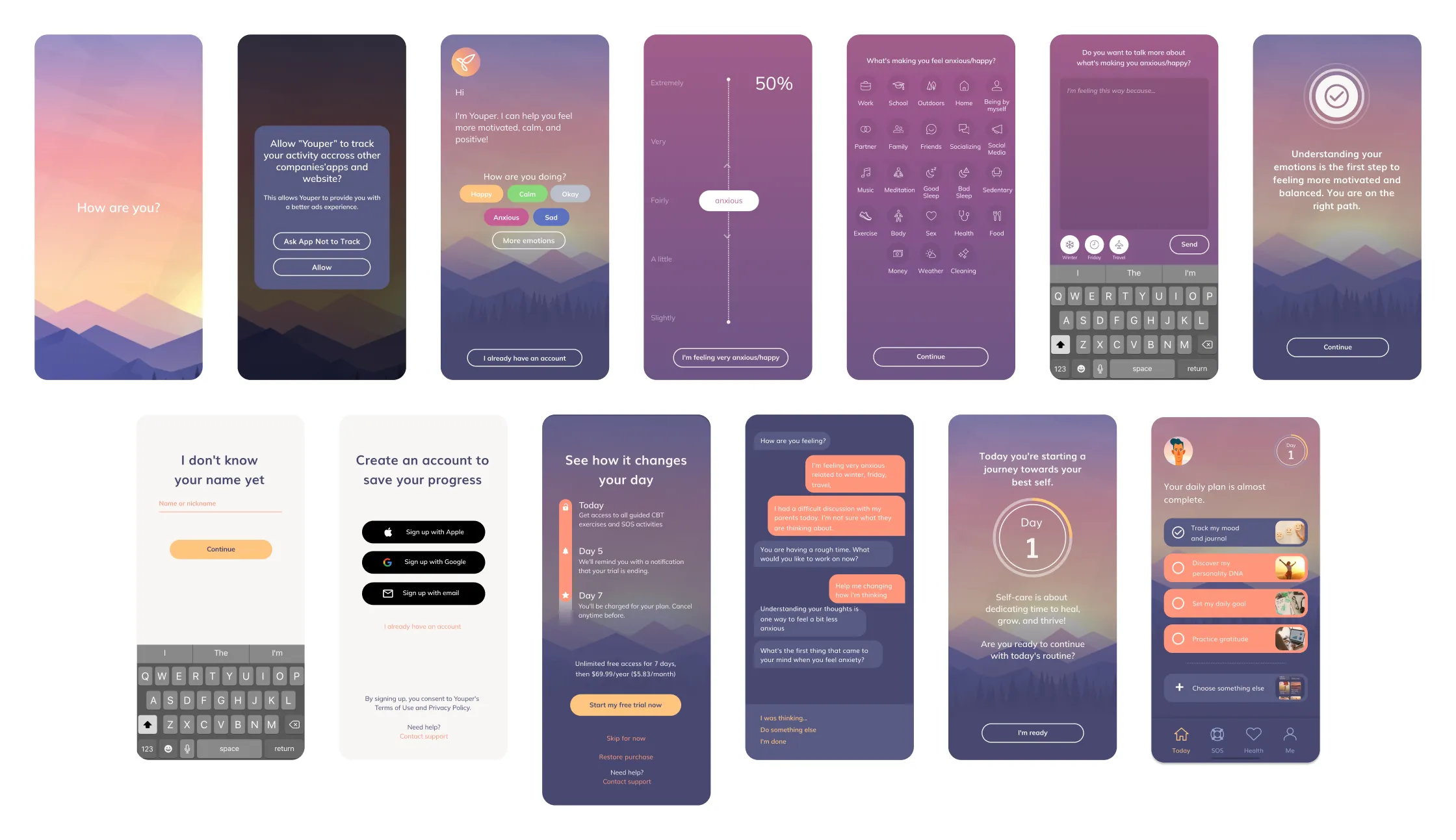
Drop-off happened at account creation, before anyone had seen what they were signing up for. Roughly half of the users who reached that screen never made it through. Support tickets suggested that the ones who did get through didn’t understand the value of the daily check-in, or how to use the app.
Onboarding barely existed. Someone downloaded the app, completed a check-in, created an account, started a free trial and was let into everything else. Nothing along the way said what the app was for.
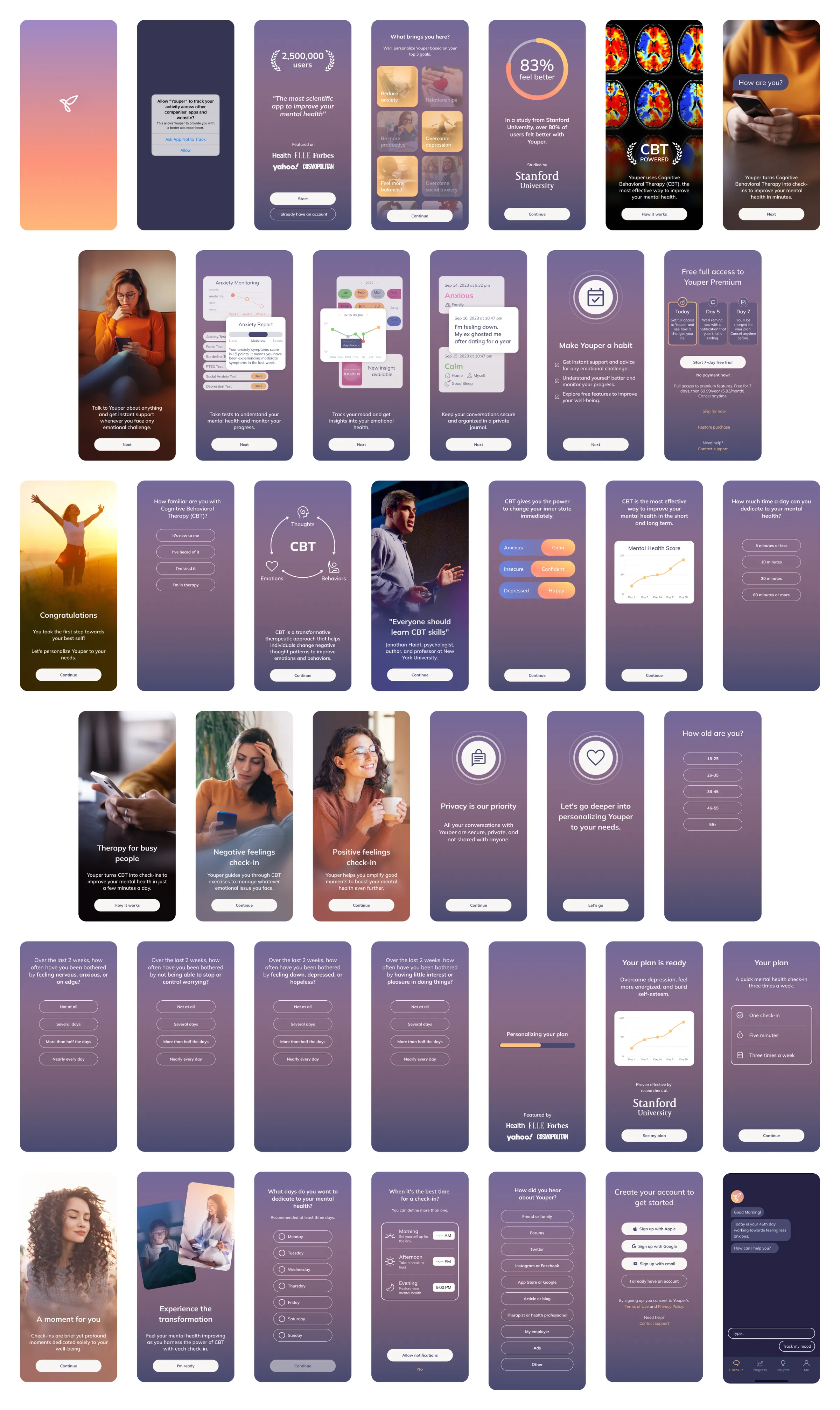
Over the next year we rebuilt it across thirteen releases: a new version roughly every month, with patches in between, reading the numbers after each. Partway through, we also rebuilt the app around open conversation with an AI, so the product we were selling changed while we worked on how to sell it.
This is one half of a bigger project to raise revenue per download. Ratings and feedback (opens in a new tab) covers the other half: paying less to get each download. This case follows what we believed could close the gap, in the order we tested it.
How we tested
Youper didn’t have the traffic for A/B tests. The CPO shipped one version a month and read the numbers after each. The reasoning: a month of directional signal was worth more than two months waiting for a clean result.
That trade runs through everything below. Changes arrived bundled, and comparisons run across time, not side by side. So this is the shape of what happened, not a controlled result.
Hypothesis one: People won’t commit to something nobody has explained
What we shipped
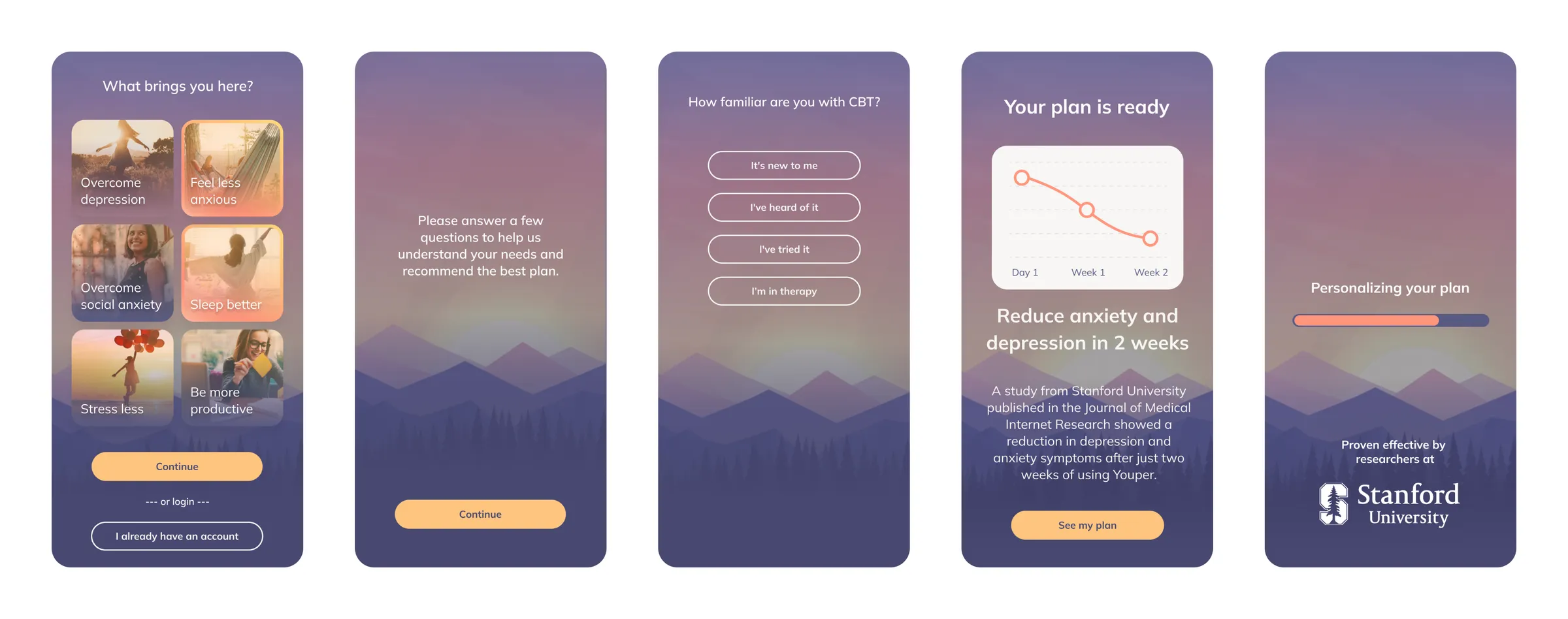
My benchmark of competing mental health apps found two patterns. Some dropped people straight into the product, which is what Youper already did. Others spent real screen time explaining the method and the features before asking for anything. We’d only ever built the first, so the team decided the second was worth testing.
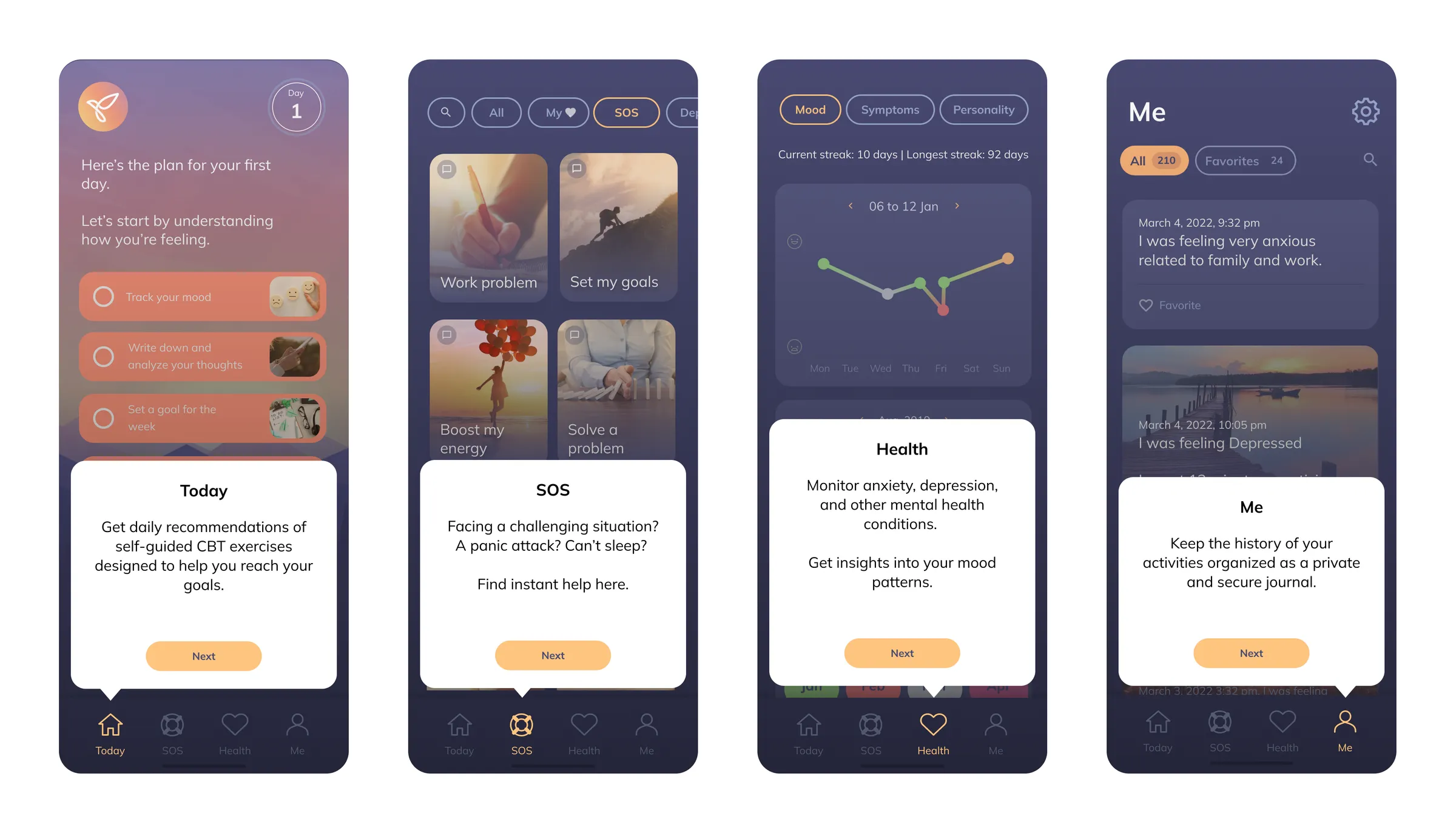
We moved explanatory material ahead of the paywall: press mentions, a study published with Stanford, testimonials, a few mental health questions to make it more interactive than reading, and a product tour of the app’s features.
What happened
Over the next month, drop-off before account creation fell, and slightly more of the people who reached the paywall started a free trial. But a new drop-off appeared earlier, in the middle of the anxiety screening, before anyone reached the product tour. The explanation helped, and we’d also added enough screens for people to quit before the end of them.
Hypothesis two: The free trial gives away what people would pay for
What we shipped
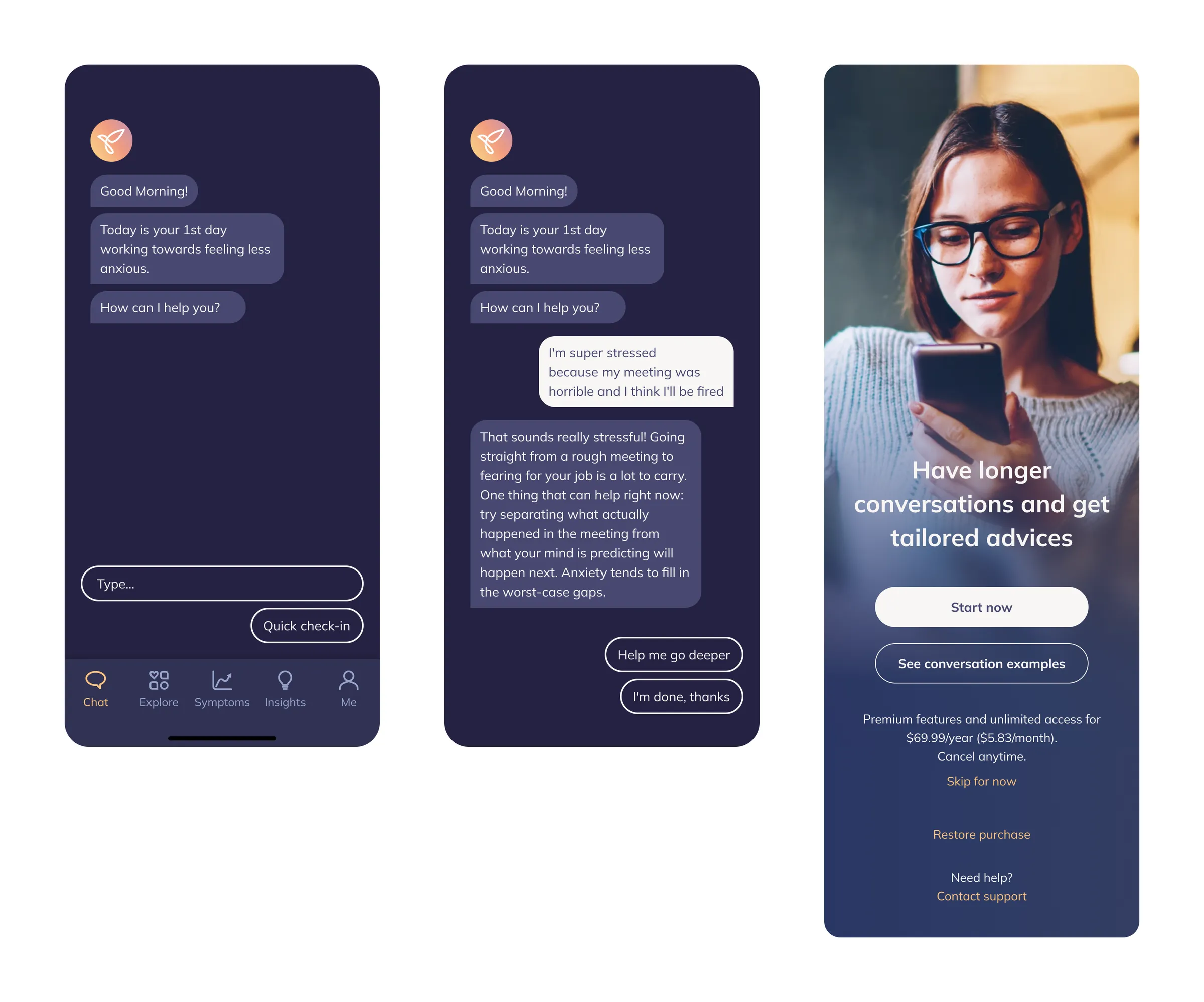
In 12.00 the product changed underneath us. Canned responses became a real conversation with a large language model, and every reply now had a cost. Conversion held steady on that release.
We capped the free tier at one message and gave subscribers ten. That held the cost down for free users, but the seven-day trial still gave everyone unlimited access to the most expensive part of the product.
After I shared a second benchmark, this time of AI products, the CEO proposed removing the trial. In 12.01, users had to pay up front to keep using the app.
What happened
The numbers fell, and we brought the trial back in a patch about a week later. Nothing else shipped in between, so it’s the one result in this case with a clear cause.
Hypothesis three: Price is what stops people at the paywall
What we shipped
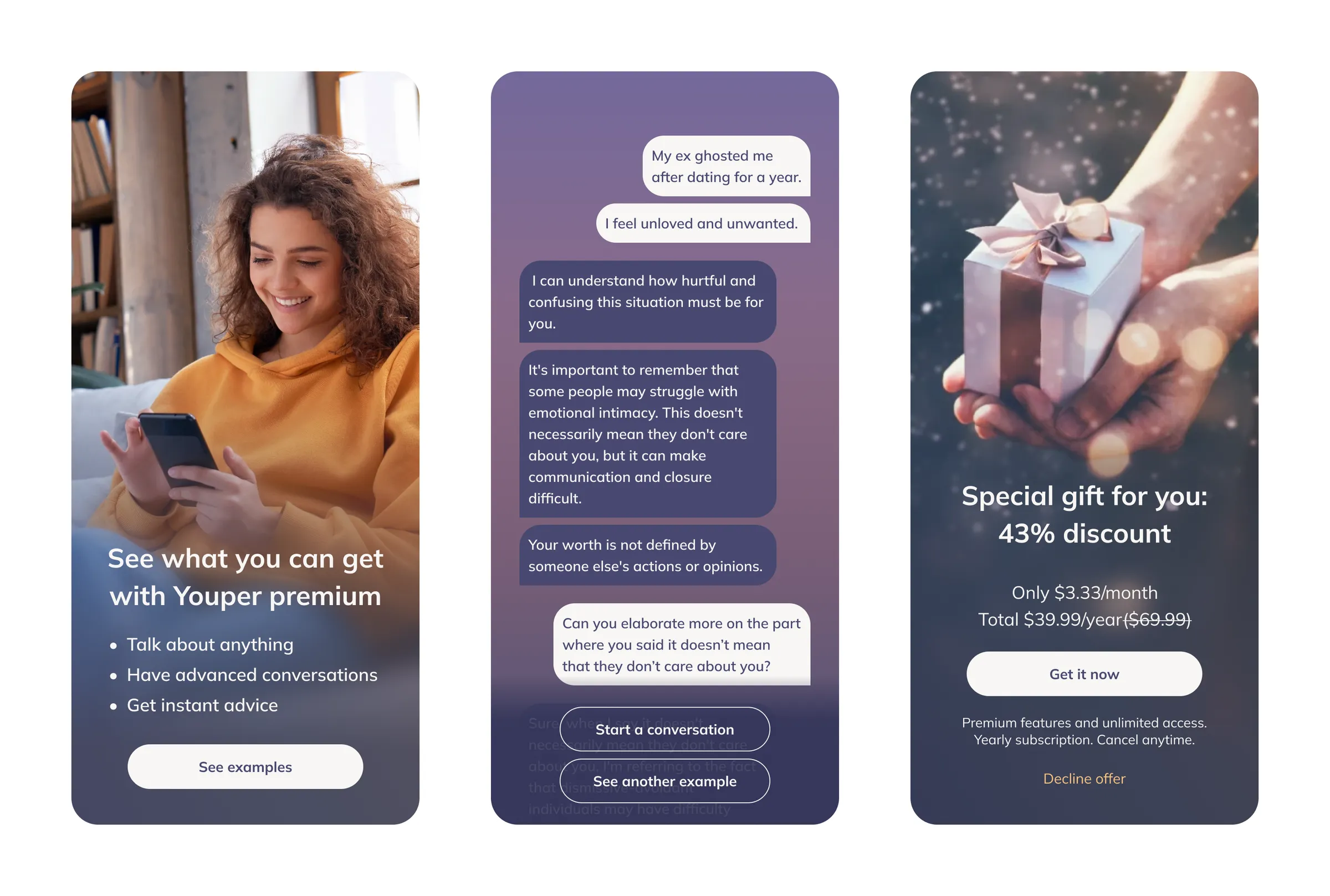
The team had decided to offer a discount, and I argued for who should get it. Our dashboards showed that 18–25-year-olds were the largest group cancelling after the trial, and the most likely to give cost as the reason. I proposed targeting them, and it shipped in 12.02 as a gift for decliners in that age group.
What happened
The discount didn’t earn the rules it added. 12.03 dropped the age targeting and offered it to everyone. The discount stayed; my targeting didn’t.
Hypothesis four: People will pay before they sign up
What we shipped
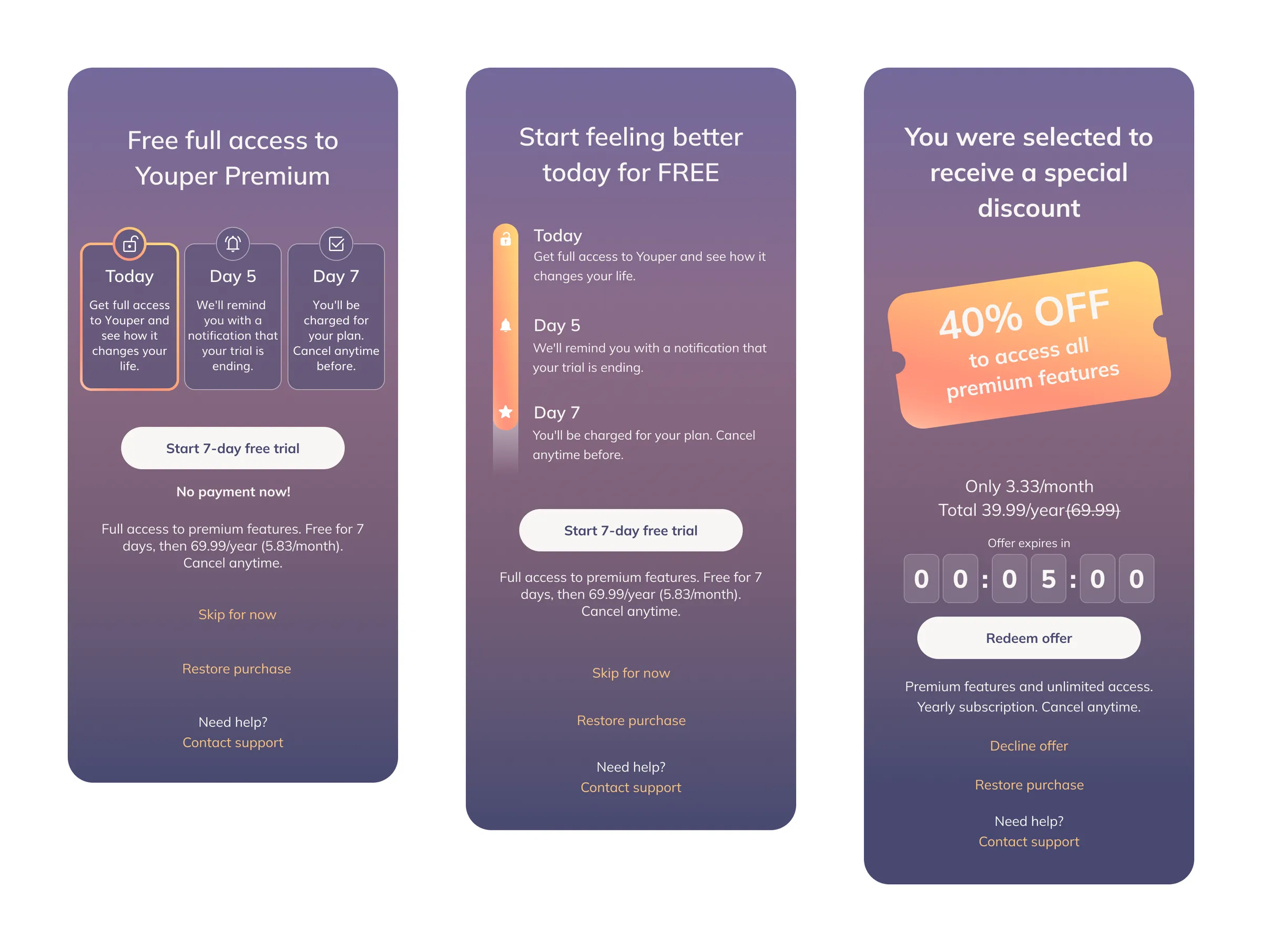
12.05 put a new paywall before sign-up and moved the account to the end, with the CBT material from hypothesis one ahead of both. People who declined saw screens tailored to the three goals they had picked, then a second paywall after signing up. If they declined again, a third paywall offered 40% off for five minutes. Free users kept the app, with one turn with the AI.
What happened
The first paywall converted better before account creation than it had after it, and revenue per download rose across the series. The same release dropped the product tour, so two things changed at once. They weren’t independent, either: the tour ran after account creation, and moving the account to the end left it nowhere to go.
Impact
Revenue per download went from about $1.95 to about $4.70, a 141% increase. The target was more than 300%, and we didn’t reach it.
Two caveats. The period covers the move to an AI product, so part of the rise is the product getting better, not the selling. And revenue per download comes from public third-party estimates; the target and drop-off figures are approximations from my own notes.
Reflections
Good research can still point to the wrong fix. I had room to test my own idea, and room to be wrong about it. The research was real: 18–25-year-olds were cancelling after the trial and naming cost as the reason. What I read into it was that they needed a different price. The targeting didn’t move the numbers enough to pay for its rules. I’d still test it; I’d just hold the idea more loosely.
Ask why, not only how. The team was open to ideas from anyone in the room. Looking back, I could have used that more to question why we were testing what we were testing, not just how to build it.